Competitive Costs

23 Years Experience

Fully Insured
BS5837:2012 is a British Standard that provides detailed guidelines for assessing trees in the context of land development. Although it is not part of the statutory legislation in the Republic of Ireland, its principles are often adopted by professionals and organizations involved in arboriculture, development and urban planning due to its comprehensive approach to tree management during development
The primary objective of our BS5837 tree surveys is to ensure that trees are appropriately integrated into land development projects. This involves assessing the impact of proposed construction on existing trees and making recommendations to protect and preserve them wherever feasible. Our surveys aim to:
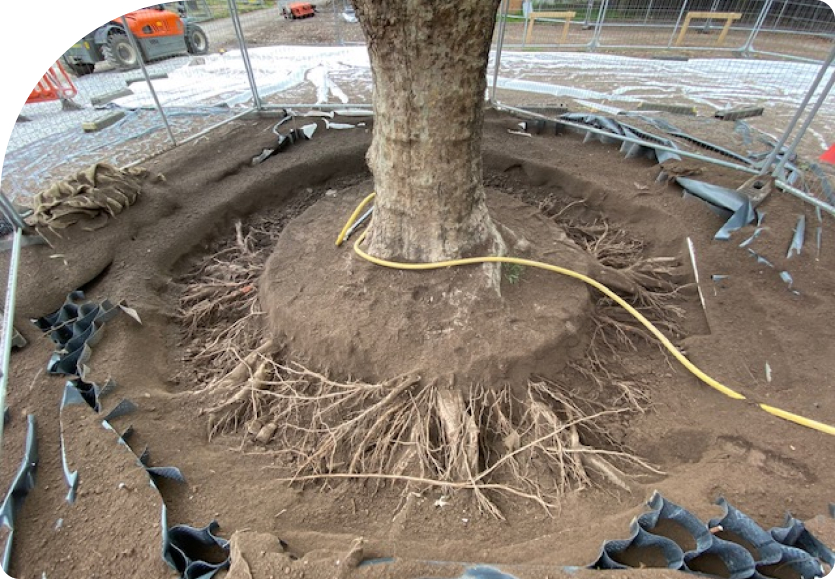
This plan maps out the location of each tree and its Root Protection Area (RPA), which is the minimum area around a tree that should be protected to ensure its survival. The RPA is calculated based on the tree’s trunk diameter, usually forming a circle around the tree.
The AMS outlines the procedures for working near trees, including construction techniques that minimize root disturbance and guidelines for pruning or other tree works. It ensures that tree protection measures are practical and enforceable throughout the construction process.
The TPP details measures to protect trees during construction, such as fencing off RPAs, implementing no-dig zones, and specifying ground protection methods. It includes clear instructions and diagrams to guide construction personnel in adhering to tree protection protocols.
The AIA evaluates the potential impacts of proposed construction activities on the surveyed trees. It considers factors such as root damage, canopy pruning, and soil compaction and provides strategies to mitigate these impacts.
Tree Identification: Each tree is identified by species, providing insights into its typical characteristics and potential issues. Measurements: Key metrics such as tree height, trunk diameter at breast height (DBH), crown spread, and canopy height are recorded. Age Class and Condition: Trees are classified by age (young, semi-mature, mature, veteran) and assessed for overall health and structural condition. Tree Categorization: Trees are categorized based on their quality and value.
These surveys help identify and mitigate risks associated with tree retention and construction, enhancing safety for both the public and construction workers.